
Gum Disease Treatment – Lancaster, PA
Treating Your Gums with the Care They Deserve

When looking at your smile, your teeth might be the first things you see, but the tissues that surround them deserve an equal amount of care. That’s why we encourage our patients to commit to a solid oral hygiene regimen at home and come to our office every six months for a checkup! If there comes a time when abnormal symptoms arise, like bleeding when you floss, it’s crucial that you don’t take the “wait and see” approach. Instead, call us right away so we can determine if an infection has developed and, if it has, the best way to treat it.
Why Choose Dentistry for Life for Gum Disease Treatment?
- Gentle, Caring, and Experienced Team
- Advanced Dental Technology
- Dental Insurance and Financing Welcome
What is Gum Disease?

Gum disease is a common problem that nearly half of Americans suffer from. But what exactly is it? In short, it’s an infection in the tissues that support your teeth. Since the symptoms are relatively mild in the early stages, it often gets overlooked. That’s partially what makes this oral health issue so dangerous! If left untreated, it can rapidly progress, negatively impacting your oral and overall health in the process. All that to say, it’s crucial to keep an eye out for abnormal symptoms and, if any develop, to contact us right away to schedule an exam.
Symptoms of Gum Disease

Oftentimes, patients don’t realize they have gum disease until they see a dentist, which is why it’s so important to come to our office every six months for an exam. It’s equally crucial to keep an eye out for warning signs of trouble, like:
- Swollen, tender, or red gums
- Bleeding when you brush or floss
- Teeth that appear longer (receding gums)
- Persistent dental sensitivity
- Chronic bad breath
- A pimple-like bump on the gums
How Do We Treat Gum Disease?

Our dental team strives to keep your smile healthy. However, should an infection develop, we offer gum disease treatment at our Lancaster dental office. During your visit, we can discuss your treatment options in depth and share which one we recommend. In the meantime, you can read on to learn a little more about each!
Scaling & Root Planing
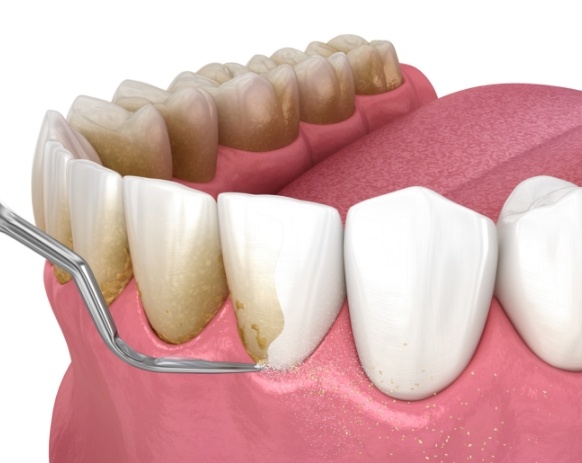
Once gum disease advances beyond gingivitis, the only solution is scaling and root planing. Also known as deep cleaning, this two-part process begins by removing plaque and tartar from above and below the gumline (scaling). We’ll then clean and smooth the tooth roots to minimize bacteria adhering to the surfaces in the future and encourage gum tissue to reattach to the teeth.
Antibiotic Treatment

Even with thorough deep cleanings, bacteria can still linger in spots that cannot be reached. This is why we commonly combine scaling and root planing with antibiotic therapy. Using a prescription antibiotic, such as Doxycycline or Azithromycin, we can help eliminate any bad bacteria or infection that lingers after scaling and root planing.